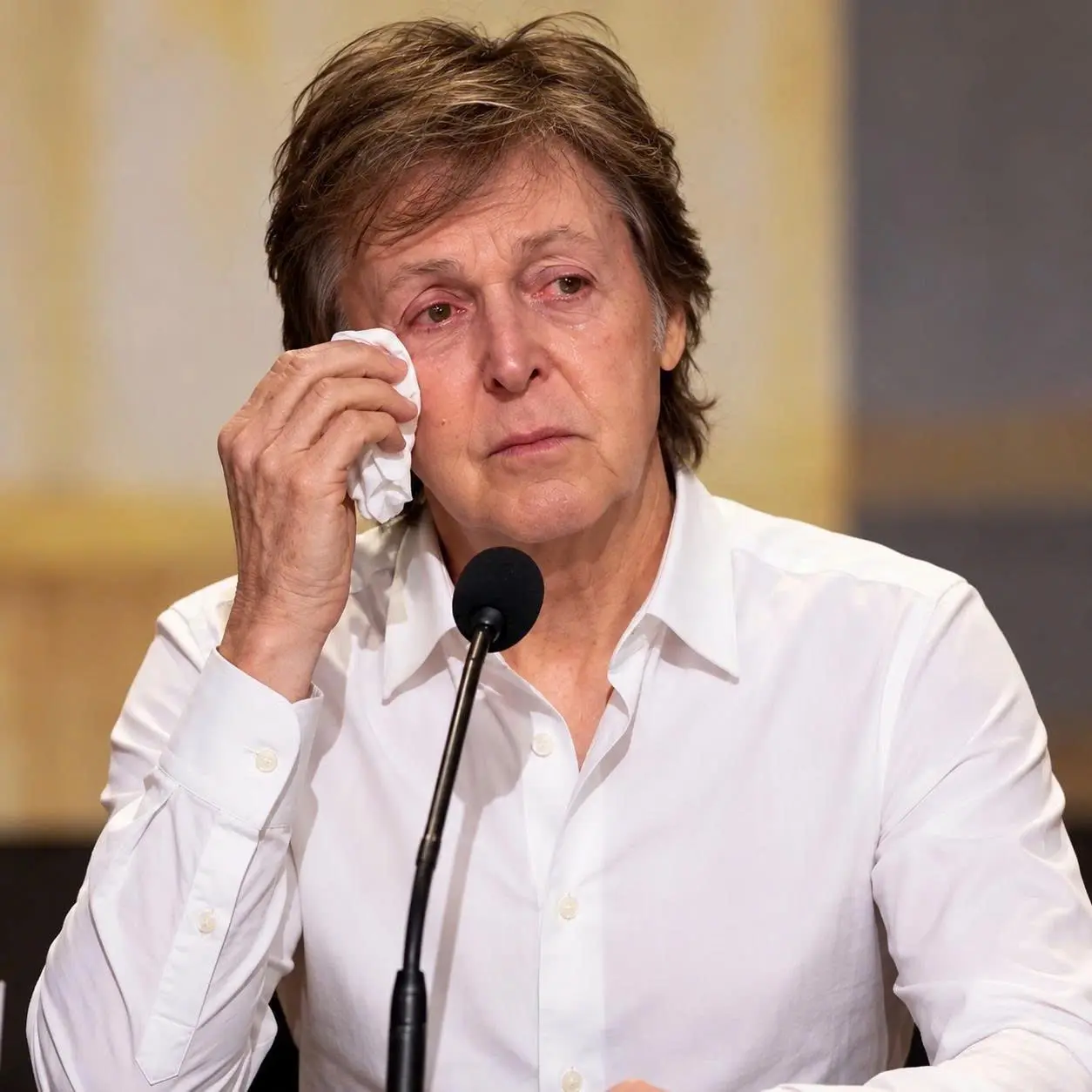
🚨💔 BREAKING: PAUL MCCARTNEY'S IMAGINED HEARTBREAKING CONFESSION LEAVES FANS SPEECHLESS — AND HIS EMOTIONAL MESSAGE ABOUT LOVE, LOSS, AND THE PASSAGE OF TIME SPARKS A GLOBAL DEBATE! 😭🎸

LONDON, ENGLAND — For more than six decades, Paul McCartney has been one of the most recognizable figures in the history of popular music.
His melodies have accompanied generations through love, heartbreak, celebration, and change.
His songs have become part of the cultural memory of millions.
And his extraordinary journey from a young musician in Liverpool to a global music legend has inspired countless performers.
But what happens when someone who has spent a lifetime creating unforgettable music is imagined speaking not as an international superstar, but simply as a man reflecting on the people, memories, and moments that shaped his life?
In a fictional emotional interview, McCartney considers the weight of time, the friendships that helped define his career, and the complicated experience of watching the world change around him.
The imagined conversation is deeply personal.
And its central message raises a powerful question:
Can even the greatest musical achievements protect someone from the ordinary sadness of growing older and remembering those who are gone?
🚨 THE MOMENT THE MUSIC LEGEND FALLS SILENT
In the fictional scenario, McCartney sits in a quiet recording studio surrounded by instruments, photographs, and reminders of his remarkable career.
A familiar bass guitar rests nearby.
The lighting is soft.
And the atmosphere is far removed from the enormous concert stages where audiences have celebrated his music.
The interviewer begins with ordinary questions.
They discuss songwriting.
The evolution of popular music.
And the lasting appeal of songs written decades earlier.
McCartney responds warmly.
He recalls the excitement of discovering music as a young man.
He talks about the extraordinary opportunities that followed.
And he smiles while reflecting on the creativity that shaped his early career.
Then the conversation turns toward memory.
The interviewer asks whether certain songs feel different as time passes.
In the imagined moment, McCartney pauses.
For several seconds, he says nothing.
Then he quietly replies:
“Sometimes a song brings back more than a melody. It brings back a whole part of your life.”
The quotation is fictional, but the idea reflects a familiar emotional experience.
Music has an extraordinary ability to connect people with memories.
💔 THE WEIGHT OF A LEGENDARY PAST

Paul McCartney's career is inseparable from the history of The Beatles.
Alongside John Lennon, George Harrison, and Ringo Starr, he helped create music that transformed popular culture.
The band's songs became international phenomena.
Their influence extended across generations.
And their creative partnership remains one of the most celebrated collaborations in music history.
But that extraordinary history also includes loss.
John Lennon died in 1980.
George Harrison died in 2001.
For fans, those losses represented the passing of beloved musical figures.
For McCartney, they also involved people with whom he had shared formative experiences and an extraordinary creative journey.
In the fictional interview, he reflects on how memories can become more meaningful with time.
The imagined conversation does not reveal a new tragedy.
Instead, it explores the emotional significance of remembering people whose influence remains present long after their deaths.
😭 THE IMAGINED CONFESSION THAT CHANGES THE ROOM
In the fictional exchange, McCartney is asked what he would tell his younger self.
He smiles at first.
Then he becomes thoughtful.
“I'd probably tell him to enjoy the ordinary moments a little more,” he says in the imagined interview.
“Because you don't always know which moments you'll remember forever.”
The interviewer remains silent.
McCartney continues.
“When you're young, you think there's always more time.”
He looks toward the instruments in the room.
“And then one day, you realize how quickly everything has moved.”
The words are not an authentic McCartney quotation.
They are part of a fictional reflection on aging and memory.
Yet the theme is universal.
People often recognize the value of ordinary experiences only after those moments have passed.
🔥 THE CONTROVERSY: SHOULD FANS EXPECT LEGENDS TO REMAIN FOREVER YOUNG?

McCartney's career has extended across extraordinary changes in music and culture.
He has performed before enormous audiences.
He has written songs that remain familiar decades after their release.
And he continues to occupy a significant place in the history of popular music.
But public admiration can create unusual expectations.
Fans may want their favorite performers to remain energetic and creatively active forever.
They celebrate new performances.
They revisit old recordings.
And they sometimes resist reminders that even legendary musicians experience the passage of time.
The fictional interview raises a difficult question:
Do audiences allow their heroes to grow older, or do they expect them to remain permanently connected to the versions of themselves that first became famous?
For many musicians, the answer is complicated.
Their work may remain timeless.
But their lives continue to change.
🎸 THE SONGS THAT CARRY A LIFETIME OF MEMORIES
McCartney's songwriting has explored love, longing, friendship, and loss.
Songs such as Yesterday, Let It Be, and Hey Jude have become deeply meaningful to listeners around the world.
Different people associate those songs with different experiences.
A wedding.
A childhood memory.
A difficult farewell.
Or a moment of personal hope.
In the fictional interview, McCartney considers how a song can take on meanings that its writer never anticipated.
The imagined conversation suggests that music belongs partly to the people who listen to it.
Once a song enters the world, it becomes connected to countless personal stories.
That relationship between artist and audience is one reason his work has remained influential.
💥 WHY AN EMOTIONAL MOMENT CAN BECOME A VIRAL SCANDAL
A dramatic headline suggesting that McCartney has made a heartbreaking confession can immediately attract attention.
Readers may assume that he has revealed a secret.
Others might fear an undisclosed health problem.
Some may interpret emotional language as evidence of a family tragedy.
But a reflective conversation does not automatically indicate a crisis.
A musician can discuss grief without experiencing a new loss.
He can reflect on aging without announcing a medical condition.
And he can become emotional about memories without revealing an undisclosed personal emergency.
The fictional scenario demonstrates how sensational framing can change the interpretation of an ordinary human experience.
A thoughtful conversation about time can be transformed into a supposed scandal.
That distinction matters.
❤️ THE IMAGINED MESSAGE ABOUT LOVE THAT TOUCHES THE HEART
In the fictional interview, the conversation turns toward love.
McCartney reflects on the way relationships influence creativity.
He considers how affection, friendship, and shared experiences can shape music.
Then he offers an imagined observation:
“People sometimes think the big moments are the ones that matter most.”
“But often it's the small things you remember.”
“A conversation. A laugh. Someone being there when you need them.”
The fictional statement introduces another central theme.
Success can be measured through awards, sales, and recognition.
But personal fulfillment is often connected to experiences that cannot be quantified.
For an artist whose work has reached millions, that contrast creates a powerful emotional narrative.
🚨 THE MOMENT FANS BEGIN ASKING QUESTIONS
Within the fictional scenario, a short excerpt from the interview begins circulating online.
The clip shows McCartney pausing before discussing the passage of time.
But the surrounding context is missing.
Some imagined viewers interpret the moment as a sign of sadness.
Others assume he is preparing to announce a major personal decision.
A few suggest that the emotional conversation must involve an undisclosed tragedy.
The speculation grows.
Yet the complete fictional interview contains no such revelation.
It is a conversation about memory, creativity, and the meaning of a long life.
The imagined reaction illustrates how easily an emotional expression can become detached from its original meaning.
💔 THE PRICE OF LIVING AN EXTRAORDINARY LIFE
McCartney's professional achievements are remarkable.
But extraordinary success can create a complicated relationship with the past.
The songs that audiences celebrate may remind their creator of people and experiences that can never be recreated.
A familiar melody may recall a recording session from decades earlier.
An old photograph may bring back memories of friendship.
And a performance of a beloved song may connect the present with a very different period of life.
The fictional narrative explores that emotional complexity.
It imagines McCartney recognizing that nostalgia can be both comforting and painful.
Remembering can bring happiness.
But it can also remind someone of what has changed.
😱 THE FICTIONAL FINAL WORDS THAT LEAVE THE ROOM SILENT
As the imagined interview approaches its conclusion, McCartney is asked what message he hopes younger musicians will remember.
He considers the question.
Then he smiles.
“Make music because you love it,” he says in the fictional exchange.
“Don't forget the people who help you along the way.”
“And don't spend so much time thinking about tomorrow that you miss what's happening today.”
The room becomes quiet.
The interviewer thanks him.
McCartney looks toward the instruments around him.
Then the imagined conversation ends with a final thought:
“You can't hold on to every moment. But sometimes, if you're lucky, you can put one into a song.”
The quotation is fictional.
Its message, however, reflects the enduring relationship between music and memory.
🎬 FINAL VERDICT: THE MOST POWERFUL CONFESSION ISN'T A SECRET
Paul McCartney's place in music history is firmly established.
His work with The Beatles and throughout his solo career has influenced generations of artists and listeners.
But the emotional interview, personal quotations, and dramatic moments described in this article are imagined.
There is no verified basis here to claim that McCartney made a heartbreaking confession 30 minutes ago or disclosed a new personal crisis.
Instead, the fictional story explores the emotional meaning of memory, friendship, creativity, and time.
Because behind the legendary songs, the sold-out concerts, and the extraordinary achievements stands a person whose life has been shaped by love, loss, and change.
And perhaps the most moving lesson of this imagined reflection is that even the greatest music legends cannot stop time—but their songs can help the rest of us remember the moments that matter. 💔🎸❤️