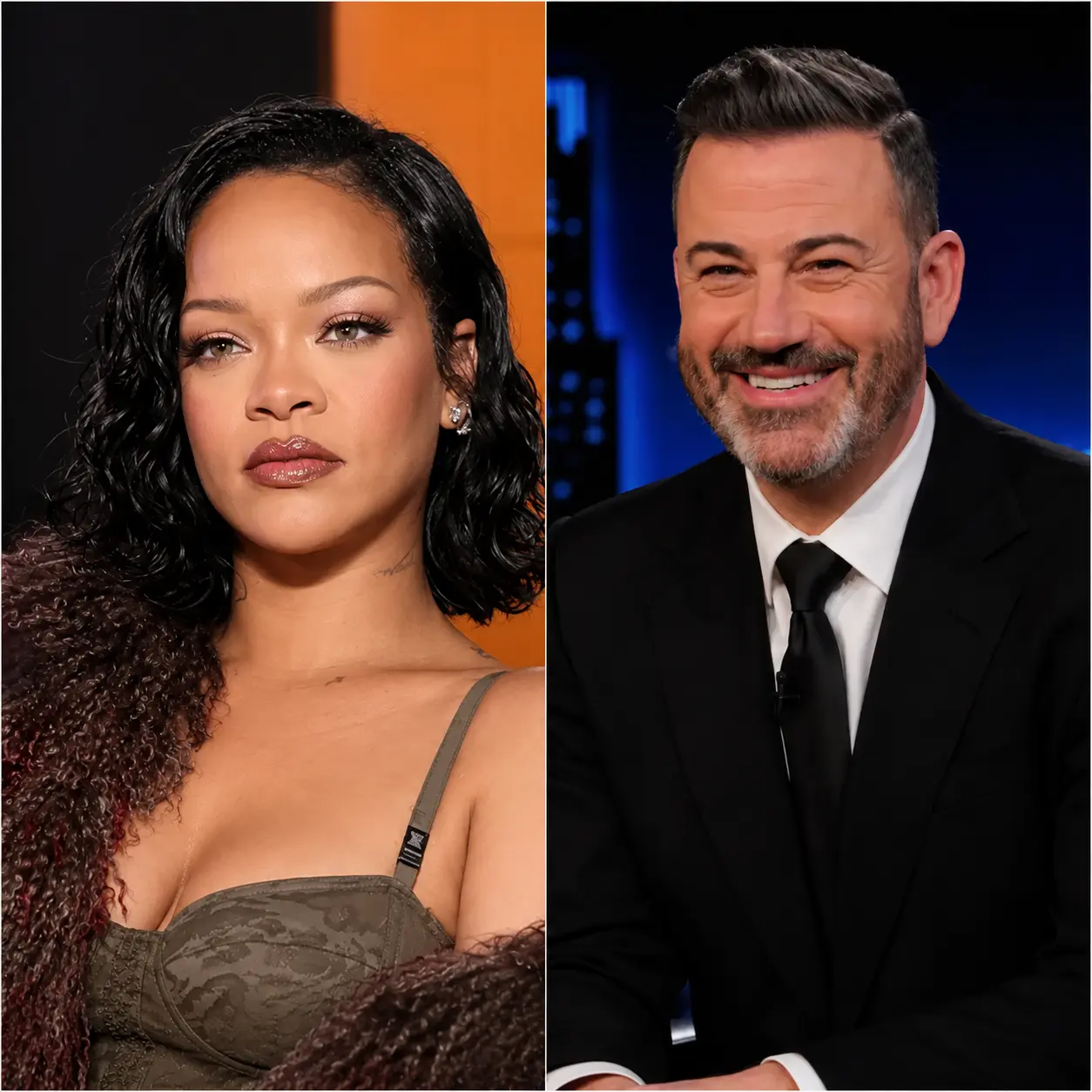
The heavy glass entrance of the federal courthouse in downtown Los Angeles locked firmly into place against a brisk autumn wind, shutting out an external world that has spent the last forty-eight hours completely consumed by the most explosive legal bombshell in the history of late-night television. For over two decades, the unstoppable cultural phenomenon surrounding global billionaire entrepreneur, fashion mogul, and music icon Rihanna has operated on a foundation of fierce independence, undeniable power, and an immaculate public reputation built across chart-topping global anthems, legendary business empires, and worldwide cultural milestones. Yet, as a quiet, reverent hush settled over the main legal suites following an unexpected closed-door filing by her high-powered litigation team, it was crystal clear to everyone inside that the superstar had officially drawn a line in the sand—launching a staggering $50 million lawsuit against Jimmy Kimmel Live, network executives, and host Jimmy Kimmel following what her lawyers are formally categorizing as a calculated, malicious on-air ambush.
For years, the public narrative surrounding modern late-night television has tolerated the sharp elbows and unscripted monologue jokes of midnight broadcast hosts, often brushing off controversial jabs as harmless entertainment. But as the certified legal documents were unsealed before federal judges, the real story revealed something far heavier, vastly more damaging, and entirely detached from standard comedic discourse. There was no bustling entourage of public relations spin-doctors, no corporate damage-control coordinators drafting casual apologies, and no network producers attempting to smooth over the wreckage with polite off-camera phone calls. Instead, a deeply resolved business mogul and her legal strategists stood their ground at the center of the firm, preparing to drag every single producer, network executive, and the host himself into a courtroom battle that legal experts are already predicting will rewrite the legal boundaries of live television forever.
When Rihanna’s lead trial attorney finally paused to address the small circle of senior partners and long-standing advisers gathered in the conference room, his words carried a shattering, uncompromising weight that underscored the absolute seriousness of the legal offensive:
“When a multi-million-dollar broadcast platform uses its massive late-night reach to tear down an artist's hard-earned reputation and her decades of global contribution with malicious falsehoods disguised as midnight humor, it is no longer a disagreement—it is a calculated character execution, and we are going to ensure they answer for every single word in a court of law.”
The declaration hung in the quiet room like a falling gavel, completely stripping away any remaining illusion that the dispute would be settled quietly behind closed doors. The expansive office filled with an overwhelming sense of gravity, punctuated only by the rustling of extensive legal exhibits, sworn affidavits, and forensic transcripts detailing the exact minute-by-minute broadcast that triggered the multi-million-dollar legal retaliation.
Within minutes of the initial court filing hitting the public docket, the digital ecosystem erupted with an unprecedented wave of energy—one entirely polarized between corporate network panic and overwhelming public support for the global icon. Social media timelines that typically pulse with fashion drops and music previews experienced a massive surge driven by intense legal debates, fierce fan loyalty, and widespread scrutiny of late-night talk show culture. Major newsrooms across Los Angeles, New York, and London scrambled to analyze the explosive litigation, recognizing immediately that this moment represented a watershed turning point for celebrities and public figures who have long felt powerless against unverified on-air claims made by powerful midnight broadcast syndicates.
As word of the $50 million lawsuit spread across various online platforms, dedicated fans and the global Navy community flooded digital spaces with supportive hashtags and words of solidarity, demanding accountability from a late-night platform long criticized for crossing ethical boundaries. The collective reaction underscored a universal, timeless truth: no matter how massive a television network's broadcast footprint or corporate backing might be, public defamation carries a real, undeniable cost when a fiercely respected icon decides to fight back with the full force of the American judicial system.
The full gravity of the legal action reached its emotional peak when associates inside the inner circle revealed how deeply the televised ambush had impacted the star and her family, leaving many close friends visibly shaken. Eschewing private silence or passive acceptance, Rihanna chose to take a stand, reminding the entertainment industry that years of dedicated enterprise and artistic legacy cannot simply be trampled upon for midnight ratings. It was a poignant reminder that true strength involves having the courage to defend your name when powerful institutions attempt to diminish your life's work on national television.
Close associates and longtime corporate directors later came forward to describe an environment that has temporarily paused its normal business rhythm to focus entirely on accountability and legal preparation. Beneath the glowing accolades and international business milestones lining the walls of her headquarters lies a daily routine now anchored in rigorous legal consultations, strategic depositions, and the unwavering conviction that protecting one's personal integrity is paramount. For an individual who has spent her entire career under the unsparing magnifying glass of the global public eye, refusing to back down in the face of institutional arrogance represents the ultimate testament to her enduring character.
As the afternoon light fades gracefully across the California horizon and the relentless, high-speed machinery of corporate television continues its frantic daily broadcast cycle, network executives are undoubtedly scrambling behind closed doors to formulate their defense. But inside that secluded legal sanctuary, the strategy is locked in, the court summons have been officially served, and the focus rests entirely on truth, justice, and holding the responsible parties accountable. The flashing cameras and noisy studio audiences of late-night television have faded into the quietest, most powerful reality of all: a legendary artist standing tall, demanding that words spoken on live television finally carry real accountability.
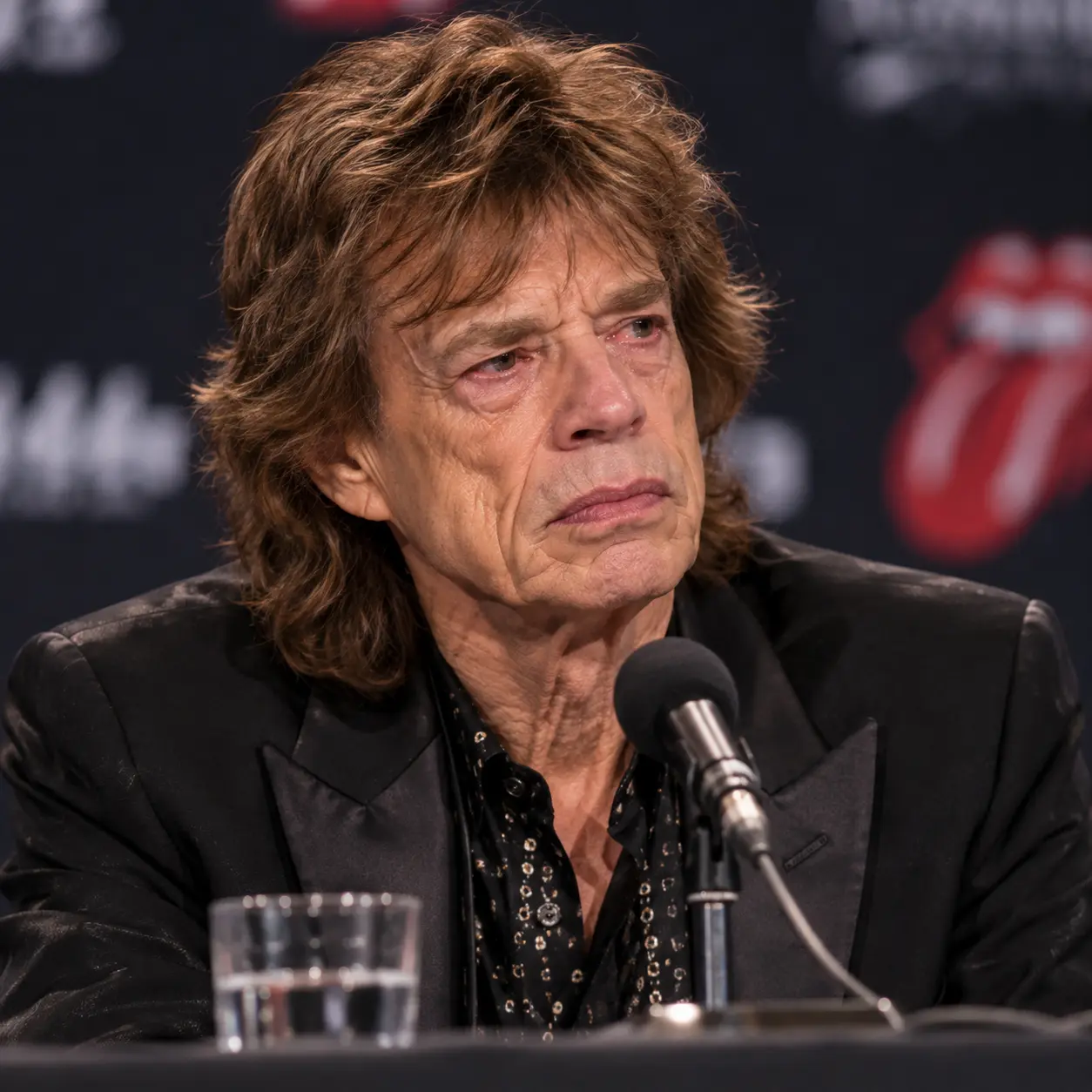
 Mick Jagger — archival photograph (Wikimedia Commons).
 Sir Patrick Stewart — archival photograph (Wikimedia Commons).
 Mick Jagger — archival photograph (Wikimedia Commons).
 Sir Patrick Stewart — archival photograph (Wikimedia Commons).
 Sir Patrick Stewart — archival photograph (Wikimedia Commons).