
BREAKING NEWS: Green Bay Falls 14–35, But the Real Detonation Came After the Final Whistle
The scoreboard read Atlanta Falcons 35 – Green Bay Packers 14, but the final score only told part of the story.
The real drama began after the final whistle.
What happened inside Lambeau Field was not simply another regular-season defeat. It was a night in which a promising start completely unraveled, a home crowd watched its team lose control, and Packers head coach Matt LaFleur was left facing a long list of uncomfortable questions.
Moments after the loss, LaFleur stepped toward the podium.
There was no attempt to celebrate the positives.
No attempt to hide behind a handful of individual mistakes.
And no attempt to pretend that a 21-point defeat was anything other than a serious warning.
“Well, that was a humbling night.”
The opening sentence immediately set the tone.
LaFleur understood what everyone in the building had just witnessed.
Green Bay had started the game with energy. The Packers scored first, taking a 7–0 lead and giving the Lambeau Field crowd exactly the kind of beginning it wanted.
For a moment, everything appeared to be going according to plan.
Then Atlanta responded.
And once the Falcons found their rhythm, the entire game changed.
The Falcons went on a 27–0 scoring run, turning a promising Green Bay start into a nightmare.
The Packers suddenly could not stop the run.
They struggled to maintain offensive momentum.
And every successful Atlanta possession seemed to put even more pressure on Green Bay.
This was no longer a close contest.
It was a fight for control.
And Atlanta had taken it.
The numbers made the difference impossible to ignore.
The Falcons finished with 498 total yards, while Green Bay managed 328.
Atlanta rushed for 242 yards.
Green Bay rushed for only 17.
That statistic alone explained much of what happened at Lambeau Field.
The Falcons were winning the physical battle.
They were extending drives.
They were creating opportunities.
And Green Bay could not find a consistent answer.
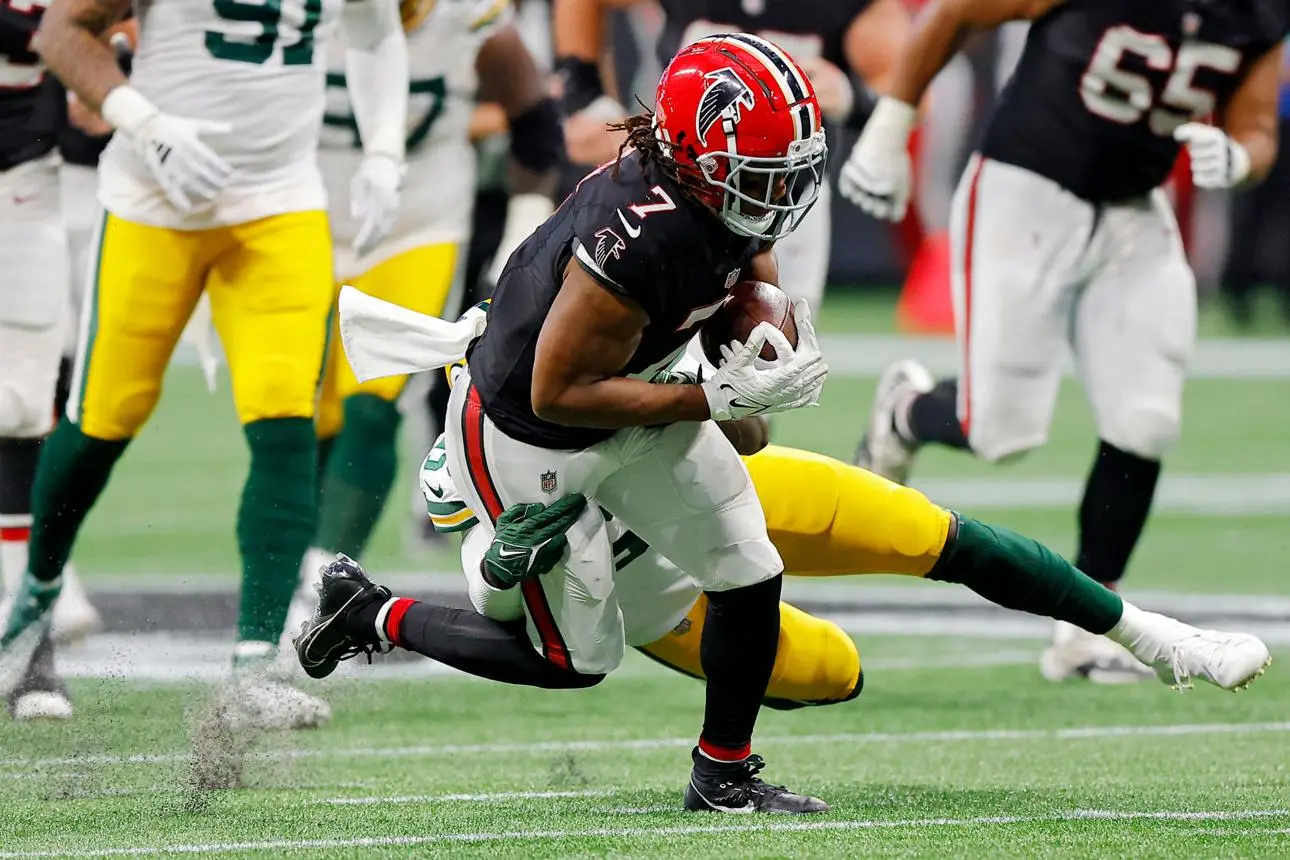
At the center of Atlanta’s attack was Bijan Robinson.
The Falcons running back delivered one of the biggest performances of the night, rushing for 194 yards and two touchdowns.
Every major run created another problem for the Packers.
Every broken tackle increased the pressure.
And every Atlanta touchdown made the home crowd quieter.
But Robinson was not the only problem.
Drake London repeatedly created separation and finished with a massive receiving performance, while Michael Penix Jr., returning to the starting lineup, settled into the game and helped Atlanta maintain control.
For Green Bay, the frustration became increasingly visible.
Jordan Love finished with 312 passing yards and two touchdowns, but the passing numbers could not erase the larger problem.
The Packers simply could not establish balance.
Without a running game, the offense became increasingly predictable.
Without defensive stops, the offense had little margin for error.
And without momentum, the game slipped away.
That is why the postgame press conference mattered.
LaFleur was not simply answering questions about one bad play.
He was confronting a performance that exposed problems across multiple areas of the team.
“We have to own this,” was the message.
And that was perhaps the most important part.
There was no easy scapegoat.
There was no single moment that could explain everything.
The Falcons had simply done too many things right while Green Bay had done too many things wrong.
That reality is difficult for any team to accept.
Especially at home.
Especially when expectations are high.
And especially when the game begins with a 7–0 lead.
The Packers entered the night with a remarkable streak behind them.
Green Bay had won 13 consecutive home openers.
That streak ended in dramatic fashion.
Instead of another celebration at Lambeau Field, Packers fans watched Atlanta dominate the second half and leave with a convincing 35–14 victory.
The atmosphere changed completely.
Early in the night, the stadium was loud.
By the second half, frustration had taken over.
The Falcons were controlling the clock.
They were controlling the line of scrimmage.
They were controlling the tempo.
And Green Bay was reacting rather than dictating.
That was perhaps the most concerning element of the entire performance.
A good team can survive mistakes.
A good team can overcome a bad quarter.
But when an opponent controls the game in virtually every major phase, the problems become much harder to explain away.
And LaFleur knew that.
The coach did not try to turn the loss into something it was not.
He acknowledged that the Packers had been outplayed.
He acknowledged that there was plenty of blame to go around.
And he acknowledged that the team had to learn from the experience.
But the questions remained.
Why could Green Bay not stop Atlanta’s rushing attack?
Why did the defense repeatedly lose control at the line of scrimmage?
Why did the offense struggle to create balance?
And perhaps most importantly, how does a team respond after being dominated in front of its own fans?
Those questions will follow the Packers into the next week.
Meanwhile, Atlanta leaves Lambeau Field with an entirely different feeling.
The Falcons entered the night looking for their first victory.
They found it in convincing fashion.
Penix returned to the starting lineup and helped guide the offense.
Robinson delivered a spectacular rushing performance.
London made major plays.
And Atlanta showed that it could withstand an early deficit and completely change the direction of the game.
That matters.
Because the Falcons did not simply win.
They responded.
Green Bay had the early advantage.
Atlanta had the final word.
And by the fourth quarter, the outcome was no longer in serious doubt.
The scoreboard eventually settled on:
ATLANTA FALCONS 35
GREEN BAY PACKERS 14
But the final numbers do not capture the emotional weight of the night.
For Green Bay, this was a reminder that every weakness in the NFL eventually gets exposed.
There is nowhere to hide.
A team can talk about potential.
It can talk about preparation.
It can talk about expectations.
But once the ball is kicked off, none of those things matter unless they translate into execution.
Atlanta translated.
Green Bay did not.
And now the Packers must decide how much this loss means.
Was it simply one disastrous night?
Was Atlanta an especially difficult matchup?
Or did the game reveal problems that could continue if they are not corrected?
Those answers will not come from a press conference.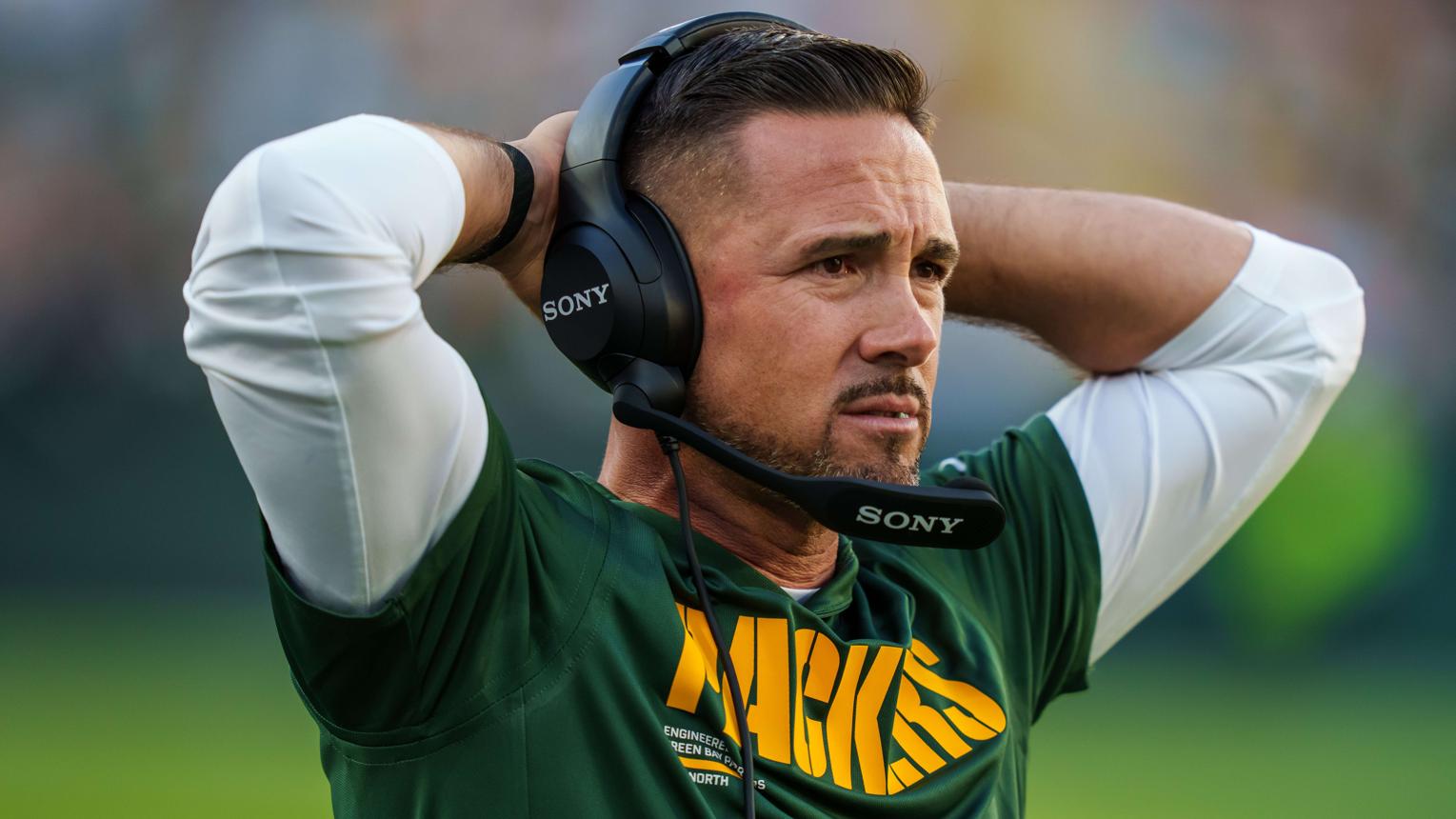
They will come from practice.
They will come from film study.
They will come from the next game.
And they will come from how the Packers respond when they step onto the field again.
Because this league does not allow teams much time to feel sorry for themselves.
The Falcons will celebrate.
The Packers will review the film.
Coaches will search for answers.
Players will be asked to respond.
And fans will wait to see whether this was an isolated collapse or the beginning of a much larger concern.
For LaFleur, the message after the game was simple.
There was no hiding from what happened.
There was no rewriting the scoreboard.
There was no pretending the night had gone according to plan.
It was a humbling night.
And sometimes, those are the nights that reveal the most.
Green Bay now has a choice.
It can allow the 35–14 loss to define the beginning of the season.
Or it can use the embarrassment as fuel to correct what went wrong.
But one thing is certain.
The Packers cannot erase what happened at Lambeau Field.
The Falcons came into Green Bay and took control.
They turned a 7–0 deficit into a 35–14 victory.
They dominated the ground game.
They controlled the clock.
They silenced the home crowd.
And when the final whistle sounded, Atlanta had something Green Bay desperately wanted:
A victory.
For the Packers, the real story began after the game.
Because sometimes the most important moment of a football game is not the final touchdown.
It is the moment when the coach walks into the press room, looks at the reporters, and admits the truth.
This was not good enough.
And now Green Bay has to prove what comes next.