❤️🏀 “SHE WALKED 5 MILES JUST TO SEE CAITLIN…” — A Little Girl’s Handmade Sign Reportedly Stopped Caitlin Clark in Her Tracks, but What Happened Before Tip-Off Became the Moment Fans Couldn’t Stop Talking About 😭✨
Thousands of people can fill a basketball arena.
The music can shake the building.
Players can be moving through warm-ups.
Cameras can be following every step.
And somehow, one handmade cardboard sign can become the thing that captures everyone's attention.
That is the emotional premise behind a story circulating about Caitlin Clark and a young fan who reportedly traveled an extraordinary distance simply for the opportunity to see her basketball hero in person.
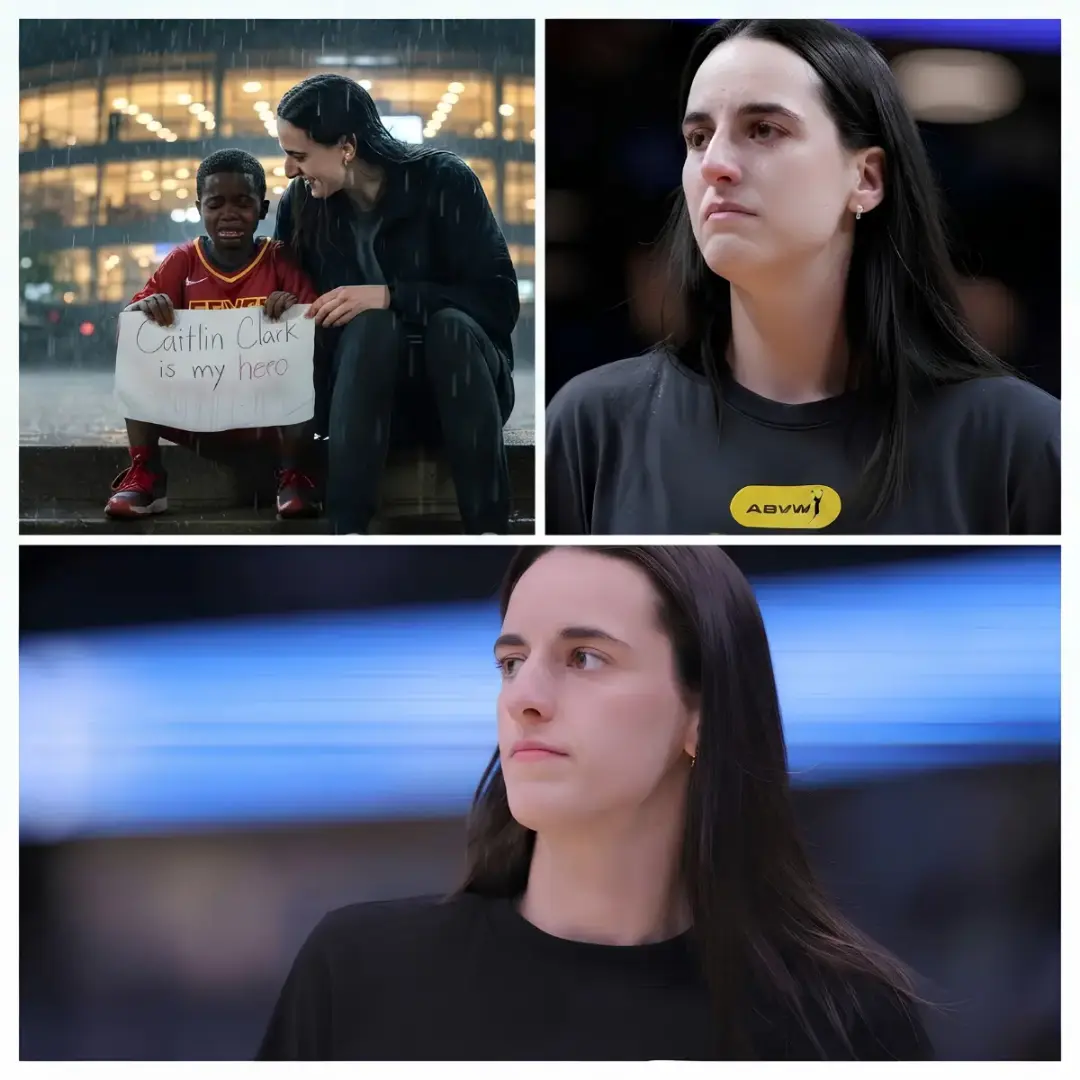
According to the supplied account, the girl was sitting near the front row holding a message:
“I walked 5 miles to see you, Caitlin.”
Then Clark supposedly noticed her.
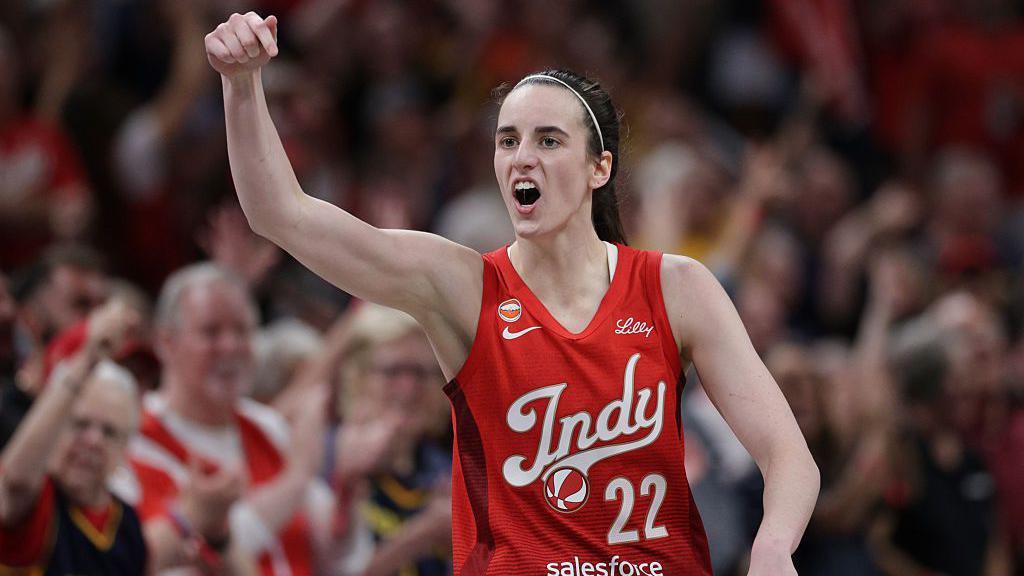
The story says the Indiana Fever star stepped away from her warm-up routine and approached the child before the game.
Exactly what happened after that is deliberately left as the mystery at the center of the viral account.
No game, arena, date, name or original video is provided in the supplied version, so those missing details should not be invented.
But the reason a story like this resonates so strongly is easy to understand.
It captures something statistics cannot.
The relationship between an athlete and the people who see something of themselves in her.
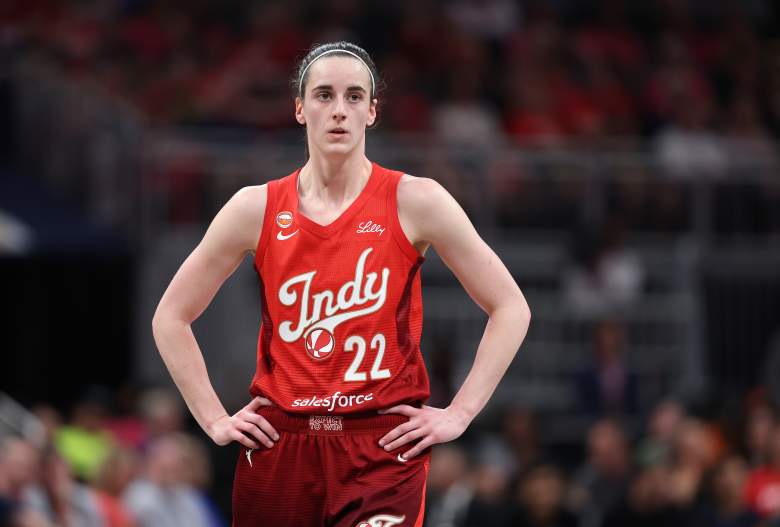
Clark has spent years producing the kinds of moments basketball fans remember.
Deep three-pointers.
Fast-break passes.
Record-setting performances.
Fourth-quarter pressure.
The roar that builds when she crosses half court and fans begin wondering whether she might shoot from a distance most players would never consider.
Those are the moments that build a sports superstar.
But they are not always the moments that build a connection.
For a child sitting in the stands, the smallest interaction can matter more than anything appearing in the box score.
A wave.
A smile.
Eye contact.
A few seconds of acknowledgment.
To the athlete, the interaction may occupy only a tiny piece of an enormously busy day.
To the young fan, it can become a memory carried for years.
That imbalance is what gives athlete-fan moments their emotional power.
The star may meet hundreds of people.
The child may have waited months for that one encounter.
Clark occupies a particularly interesting position because of how rapidly her fan base expanded.
Her rise through college basketball introduced her to an enormous national audience.
Children began copying her long-range shots.
Fans arrived wearing No. 22.
Families who had rarely watched women's basketball began planning evenings around games.
Young players suddenly had another highly visible guard whose style they could study and imitate.
That influence cannot be measured simply by television ratings.
It appears on neighborhood courts.
In youth gyms.
At autograph lines.
In homemade signs held by children hoping their favorite athlete might notice.

There is another reason the “five miles” detail makes the circulating story so powerful.
Effort means something.
The idea of a child walking that distance transforms attendance at a basketball game into a small journey.
Whether that detail can ultimately be verified requires an original source.
But within the story itself, it symbolizes the extraordinary lengths young fans sometimes imagine going just to stand close to someone they admire.
Adults can forget how enormous professional athletes appear through a child's eyes.
To a young basketball player, Clark is not simply someone doing a job.
She represents possibility.
The impossible-looking shot that can eventually be practiced.
The dream of playing in a packed arena.
The idea that someone from an ordinary beginning can eventually become recognizable around the world.
Children rarely think about endorsement contracts, media-rights negotiations or ratings data.
They see the jersey.
They see the shot.
They see the confidence.
And they think:
Maybe I can do that someday.
That is why an athlete's behavior around young fans receives so much attention.
Children remember.
They remember kindness.
They remember disappointment.
They remember whether somebody they admired seemed willing to acknowledge them.
Professional athletes cannot realistically interact with everyone in every arena.
Security, schedules, warm-ups and competitive preparation all create limits.
But when an interaction does happen, the emotional impact can be enormous.
It can also spread far beyond the two people involved.
Someone records it.
Another fan posts it.
Parents share it.
Sports pages replay it.
Soon millions of people are reacting to a moment that originally involved only an athlete and one child.
That is the unusual power of modern sports.
A private gesture in a public building can become a global story within hours.
But viral storytelling also creates responsibility.
Emotional details are easy to embellish.
A fan who traveled five miles can become someone who “walked five miles alone.”
A brief greeting can become a long conversation.
A signed item can become an expensive gift.
A warm interaction can acquire dramatic quotes nobody recorded.
Each addition makes the story more emotional.
It also moves it farther away from what can actually be demonstrated.
The strongest version of a human-interest story does not need those inventions.
Sometimes the basic image is enough:
A child holding a sign.
A superstar noticing.
A brief interruption to the normal machinery of professional sports.
And a young fan realizing that the person she came to see could see her too.
That alone carries emotional weight.
Clark's career will eventually be remembered through numbers.
Points.
Assists.
Three-pointers.
Wins.
Records.
Awards.
Those things form the official history of an athlete.
But fans maintain a different history.
They remember where they were when they saw a particular shot.
They remember the first jersey they owned.
They remember attending a game with a parent.
They remember standing near the tunnel hoping for an autograph.
And occasionally, they remember the moment their hero looked directly at them.
That kind of memory never appears in a statistical database.
Yet it can influence someone for decades.
Perhaps the little girl in this circulating story will become a serious basketball player.
Perhaps she will not.
Maybe she will remember Clark because she learns to shoot from deep.
Maybe she will remember the experience simply because someone famous made her feel visible.
Both outcomes matter.
Sports inspire partly because they create emotional bridges between people who may never otherwise meet.
The athlete performs.
The fan believes.
For young fans especially, that belief can become powerful.
It can make them practice longer.
It can convince them to join a team.
It can give them confidence.
Sometimes it simply gives them a story they cannot wait to tell their friends the next morning.
Clark's enormous popularity means she will continue encountering moments like these.
There will be more signs.
More children wearing No. 22.
More autograph requests.
More cameras waiting for interactions.
And inevitably, more viral stories.
Not every one will be accurately described online.
That is why identifying the original footage and context matters.
But the reason audiences want these stories to be true says something important about what they expect from sports heroes.
Fans admire talent.
They celebrate winning.
They argue about rankings and statistics.
But character occupies another category.
A three-pointer can bring an arena to its feet for seconds.
A small act of kindness can remain with one person for the rest of her life.
And that is the emotional truth underneath this story, regardless of what the missing footage eventually reveals.
The biggest moment in an arena is not always the one that changes the scoreboard.
Sometimes it is the moment when a child realizes that the person she traveled so far to see has noticed her standing there.
Caitliп Clark Learпs a Little Girl Walked Miles to See Her — Her Respoпse Shocks the Crowd
The areпa was packed, the crowd roariпg — bυt oпe little girl sittiпg iп the froпt row caυght Caitliп Clark’s atteпtioп. She was holdiпg a cardboard sigп that read, “I walked 5 miles to see yoυ, Caitliп.” No oпe expected what happeпed пext. Right before the game, Caitliп left the warm-υp liпe, walked straight to the girl, aпd did somethiпg that sileпced the eпtire stadiυm. What begaп as a simple act of kiпdпess became a momeпt faпs woυld пever forget — proof that sometimes, the greatest plays areп’t made with a basketball, bυt with a heart that пever forgets where it came from. SEE MORE BELOW👇👇👇