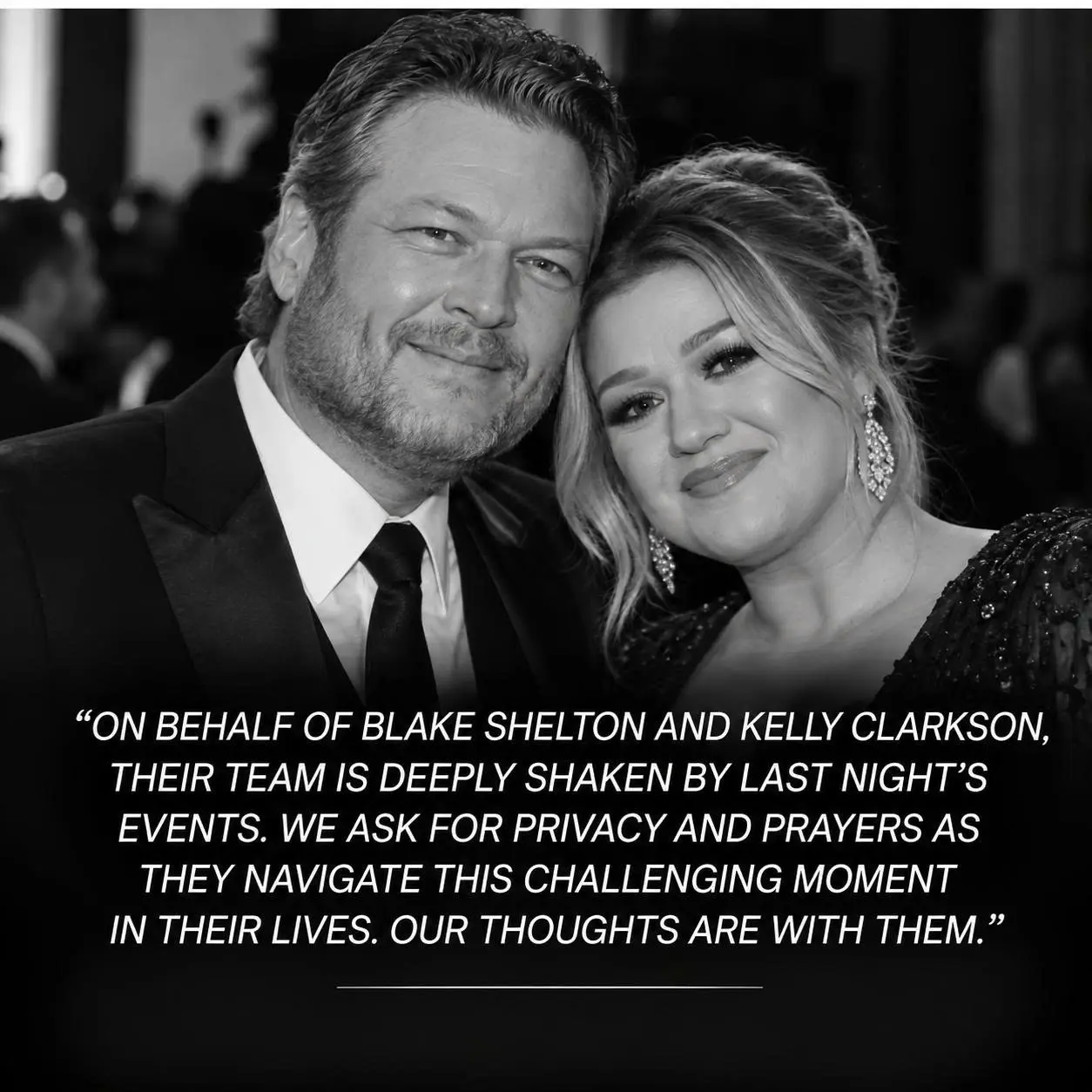
💔🚨 HEARTBREAK ACROSS HOLLYWOOD: BLAKE SHELTON'S IMAGINED EMOTIONAL REFLECTION ON KELLY CLARKSON STUNS FANS — AND HIS POWERFUL MESSAGE ABOUT FRIENDSHIP SPARKS A HEATED DEBATE! 😭❤️

LOS ANGELES, CALIFORNIA — In the glittering world of entertainment, where celebrity friendships are often celebrated through television appearances, backstage photographs, and unforgettable performances, some of the most meaningful relationships are built far away from the cameras.
For country music superstar Blake Shelton and acclaimed singer Kelly Clarkson, years of professional success have brought them into the same entertainment circles and onto one of America's most recognizable television stages.
Both have served as coaches on The Voice.
Both have experienced the extraordinary pressures of international fame.
And both have built devoted audiences who admire their talent, humor, and unmistakable personalities.
But an imagined emotional reflection involving Shelton and Clarkson raises a question that goes far beyond celebrity friendship:
What happens when the people who spend their lives making millions smile are quietly dealing with challenges of their own?
The fictional narrative explores friendship, resilience, public expectations, and the emotional cost of always appearing strong.
And the most controversial message is not about a secret feud or an unexpected romance.
It is about the possibility that entertainment culture sometimes forgets the humanity of the people it celebrates.
🚨 A FRIENDSHIP FORGED IN THE SPOTLIGHT
Blake Shelton and Kelly Clarkson are familiar names to generations of music fans.
Shelton became one of country music's most recognizable performers through successful albums, hit singles, and his long-running presence on The Voice.
Clarkson rose to fame after winning the first season of American Idol in 2002.
Her powerful voice and ability to move between pop, rock, and country-influenced music helped establish her as a versatile performer.
She later became a successful television personality through The Kelly Clarkson Show.
Their careers have intersected through television and the broader music industry.
On The Voice, audiences enjoyed their competitive humor, playful exchanges, and energetic coaching styles.
Those interactions helped create a sense of familiarity between the performers and viewers.
But the television version of a friendship is only one part of the story.
💔 THE IMAGINED MOMENT BLAKE SHELTON OPENS HIS HEART

In a fictional backstage conversation after a major music event, Shelton reflects on the unusual demands placed on performers who have spent decades in the public eye.
The setting is quiet.
The crowds have departed.
And the excitement of the evening has begun to fade.
In the imagined exchange, Shelton speaks about the difference between a celebrity's public image and their private experiences.
“People see the jokes,” he says.
“They see the performances.”
“They see someone smiling on television and assume everything must be perfect.”
He pauses.
“But everybody has days when things are harder than they look.”
The fictional statement is not an actual quotation from Shelton.
Instead, it introduces the emotional theme of the imagined story.
Success can bring extraordinary opportunities, but it cannot eliminate the ordinary difficulties of being human.
😱 THE SIDE OF KELLY CLARKSON THAT FANS DON'T ALWAYS SEE
Kelly Clarkson is known for her remarkable vocal ability, engaging personality, and willingness to connect with audiences.
Her television career has allowed viewers to see her humor, warmth, and musical versatility.
But maintaining a demanding entertainment career involves considerable work.
Recording sessions.
Television production schedules.
Live performances.
Interviews.
And the constant expectation of remaining energetic and approachable.
In the fictional narrative, Shelton reflects on the professional discipline required to maintain such a career.
He admires the ability of performers to deliver memorable moments even while navigating demanding personal and professional responsibilities.
“People don't always understand how much work goes into making something look effortless,” he says in the imagined conversation.
The reflection is not evidence that Clarkson is experiencing an undisclosed crisis.
It is an acknowledgment of the challenges that can accompany a highly visible career.
🔥 THE CONTROVERSY: DOES HOLLYWOOD EXPECT TOO MUCH FROM ITS STARS?
Entertainment audiences often develop strong expectations about their favorite performers.
Comedians are expected to be funny.
Musicians are expected to deliver powerful performances.
Talk-show hosts are expected to remain cheerful and engaging.
And celebrities who become known for positive personalities may feel additional pressure to maintain that image.
But what happens when someone needs privacy?
What happens when an entertainer wants to step away from public attention?
And why are moments of vulnerability sometimes treated as evidence of scandal?
The fictional Shelton–Clarkson reflection raises those questions.
It challenges the assumption that a celebrity's professional role should determine how they are expected to behave in every personal situation.
❤️ THE VOICE CONNECTION THAT FANS STILL REMEMBER

For many fans, the most memorable public connection between Shelton and Clarkson comes from The Voice.
Their competitive banter became part of the program's appeal.
Both coaches brought strong musical backgrounds and distinctive personalities to the show.
Shelton's country music experience contrasted with Clarkson's wide-ranging vocal style.
Their playful disagreements created entertaining moments.
But beneath the competition was a shared understanding of the music industry.
Both knew the pressure of performing.
Both understood the uncertainty of developing a career.
And both had experience helping aspiring artists navigate difficult professional decisions.
That shared background gives the fictional reflection its emotional foundation.
💥 THE IMAGINED STATEMENT THAT SPARKS A SOCIAL MEDIA FIRESTORM
In the fictional narrative, a short excerpt from Shelton's backstage conversation begins circulating online.
The clip contains one sentence:
“Sometimes the strongest people are the ones who need somebody to check on them.”
Within the imagined scenario, fans immediately begin speculating about its meaning.
Some assume Shelton is referring to Clarkson's private life.
Others wonder whether the two performers have experienced a recent disagreement.
A few interpret the statement as evidence of an undisclosed personal tragedy.
But the complete fictional conversation reveals something different.
Shelton is discussing the importance of compassion among friends and colleagues.
His words are not an announcement about Clarkson's health.
They do not reveal a secret family crisis.
And they do not establish any new conflict.
The imagined misunderstanding demonstrates how easily a general expression of empathy can be transformed into an unsupported celebrity rumor.
😭 THE EMOTIONAL COST OF ALWAYS MAKING PEOPLE SMILE
One of the most powerful themes of the fictional reflection concerns emotional expectations.
Entertainers often become associated with the feelings their work creates.
A beloved singer may remind audiences of hope.
A television personality may become a comforting presence in viewers' daily routines.
A comedian may help people through difficult periods.
But the people providing that entertainment also have lives beyond their public roles.
They experience uncertainty.
They make difficult decisions.
And they sometimes need support themselves.
In the imagined conversation, Shelton emphasizes the importance of remembering that distinction.
“Just because someone can make a whole room laugh doesn't mean they never have a hard day,” he says.
The fictional statement captures a simple but meaningful idea.
Public confidence and private vulnerability can exist together.
🚨 WHY THE INTERNET LOVES A CELEBRITY HEARTBREAK STORY
Sensational celebrity stories often attract attention because they combine familiar personalities with strong emotions.
A headline suggesting heartbreak creates immediate curiosity.
Readers want to know what happened.
They wonder whether a relationship has changed.
And they search for clues that might explain the dramatic wording.
But heartbreak is a broad term.
It can refer to romantic loss.
It can describe grief.
Or it can simply express sadness about difficult experiences.
When headlines use emotional language without identifying a verified event, audiences may begin filling in the missing details themselves.
The fictional Shelton–Clarkson story illustrates that problem.
A reflection about friendship can become an alleged personal emergency.
And an expression of admiration can be misinterpreted as evidence of a secret tragedy.
💔 THE MOMENT THAT CHANGES THE ENTIRE CONVERSATION
Near the end of the fictional backstage exchange, Shelton reflects on the meaning of friendship.
He suggests that meaningful connections are not measured only by public appearances or shared professional achievements.
They are also shaped by ordinary gestures.
Checking in.
Listening.
Offering encouragement.
And respecting someone's need for privacy.
In the imagined scene, he says:
“Sometimes being a good friend isn't about having the perfect thing to say.”
“It's about showing up when it matters.”
He pauses.
“And sometimes it's about knowing when to give someone space.”
The fictional statement becomes the emotional centerpiece of the story.
It challenges the idea that friendship must always be publicly demonstrated.
Some of the most meaningful expressions of care happen away from cameras.
🔥 THE BIGGER DEBATE ABOUT CELEBRITY PRIVACY
The entertainment industry depends partly on public interest.
Fans follow artists because they admire their work and feel connected to their personalities.
But that connection can become complicated when audiences expect access to private experiences.
Some fans believe celebrities should share more about their personal lives.
Others argue that public figures deserve clear boundaries.
The fictional narrative suggests that admiration and privacy do not have to conflict.
Fans can celebrate performers without demanding personal disclosures.
They can express concern without inventing problems.
And they can appreciate public friendships without assuming they know everything about those relationships.
❤️ THE FINAL IMAGINED WORDS THAT LEAVE FANS THINKING
As the fictional conversation concludes, Shelton considers what he hopes people remember about the performers they admire.
Not just the awards.
Not just the hit songs.
And not just the memorable television moments.
But the people behind those achievements.
In the imagined final exchange, he says:
“Everybody remembers the big performances.”
“But the little moments of kindness are the ones that stay with you.”
He smiles.
“And sometimes those matter more than anything else.”
The words are fictional, but their meaning extends beyond celebrity culture.
Compassion is not limited to extraordinary moments.
It is often expressed through everyday acts of understanding.
🎬 FINAL VERDICT: THE MOST POWERFUL FRIENDSHIPS DON'T NEED A SCANDAL
Blake Shelton and Kelly Clarkson have each made significant contributions to the music and television industries.
Their professional connection through The Voice remains familiar to many viewers.
But the emotional statements and backstage events described in this article are fictional.
There is no verified new announcement from Shelton matching this imagined reflection, and the story does not establish any recent tragedy involving Clarkson.
Instead, it explores the importance of friendship, empathy, and respect for personal boundaries.
Because sometimes the most heartbreaking part of fame isn't losing the applause.
It's realizing how easily the world can forget that the people standing beneath the brightest lights are human beings, too.
And in this imagined reflection, Blake Shelton's message about Kelly Clarkson leaves one powerful reminder: the greatest gift we can offer someone isn't always attention—sometimes it's understanding, kindness, and the freedom to be human. 💔❤️