🚨💰 “THE CAITLIN CLARK EFFECT HAS BECOME BIG BUSINESS” — Forbes Data Reveals the Enormous Commercial Power Behind No. 22 as the Clark–Angel Reese Debate Explodes Far Beyond the Basketball Court 🔥🏀
Caitlin Clark's impact on women's basketball can be measured in points, assists, three-pointers and wins.
But increasingly, some of the most fascinating numbers attached to her name are not appearing on a basketball scoreboard.
They are appearing in business conversations.
Endorsements.
Television audiences.
Ticket demand.
Merchandise.
Media rights.
Brand recognition.
And together, those factors have transformed Clark from an elite basketball player into one of the most commercially significant young athletes in American sports.
That reality is the legitimate story underneath a dramatic claim circulating online that Forbes has declared Clark the “most powerful female athlete on the planet.”
The actual Forbes recognition was different, but still remarkable.
In December 2024, Forbes included Clark on its list of the World's 100 Most Powerful Women, highlighting the extraordinary attention surrounding her breakthrough year.
She was the first basketball player to make that particular ranking.
That distinction alone illustrates just how far her influence had traveled beyond the court.
But another viral number requires correction.
The circulating account claims Clark generated $11.1 million in rookie off-court earnings.
Forbes has separately estimated her 2024 total earnings at approximately $8.1 million.
That does not make the business story surrounding Clark less impressive.
If anything, the verified numbers are extraordinary enough without exaggeration.
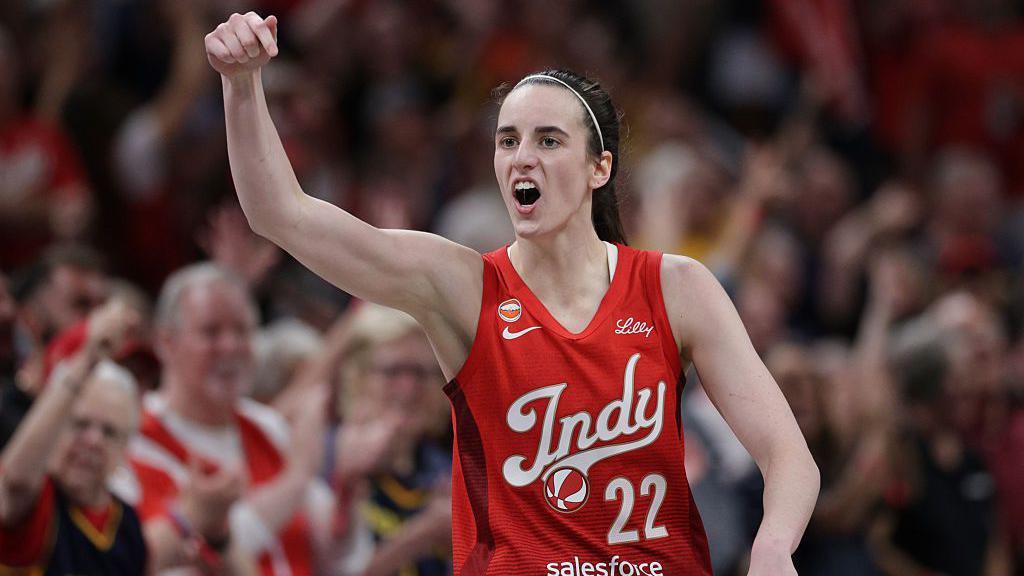
The foundation of Clark's commercial appeal is straightforward.
People want to watch her play basketball.
That sounds obvious, but it is the most important component of the entire economic equation.
Brands can manufacture advertisements.
They cannot manufacture genuine audience fascination.
Clark developed that fascination during her college career at Iowa, where her extraordinary scoring and long-range shooting turned games into national events.
By the time she entered the WNBA as the No. 1 overall draft pick in 2024, she was not beginning the conventional process of becoming famous as a professional athlete.
She was already famous.
The WNBA became the next stage for an audience that had been following her for years.
That created an unusually powerful commercial situation.
Nike reportedly committed to a major long-term relationship with Clark.
She also developed partnerships with brands including State Farm and Wilson.
The specific products differ, but the commercial logic is similar.
Brands are not simply purchasing access to an athlete.
They are purchasing association with attention.
Clark generates it constantly.
When she plays, people watch.
When she speaks, clips circulate.
When a new product involving her appears, fans discuss it.
When somebody criticizes her, supporters respond.
Even arguments about Clark increase the size of the conversation surrounding her.
Attention has economic value.
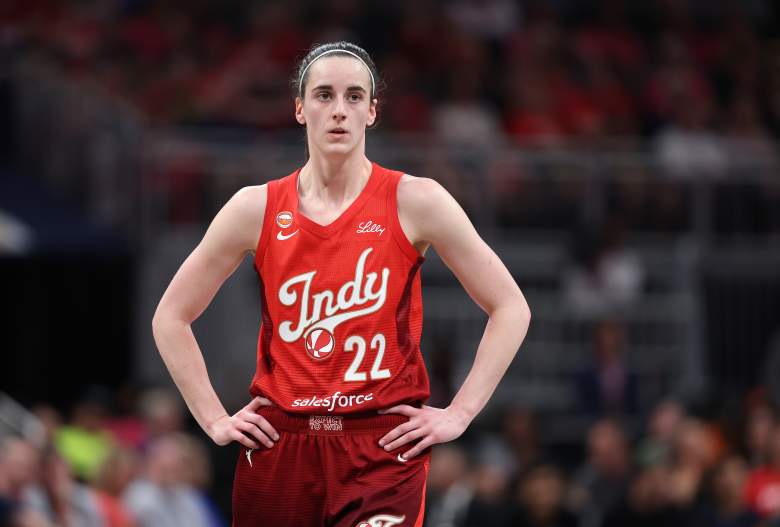
This is where the Angel Reese comparison becomes more complicated than the viral post suggests.
Clark and Reese have frequently been placed opposite each other in media narratives dating back to their college careers.
Their contrasting personalities, playing styles and fan bases created an easy storyline.
Every matchup could be promoted as another chapter.
Every statistical comparison generated discussion.
Every interview produced another opportunity for fans to choose sides.
But sports marketing is not necessarily a zero-sum game.
One athlete becoming commercially successful does not automatically make another athlete commercially undesirable.
And the supplied claim that brands now consider Reese a “massive commercial liability” would require direct evidence from those companies or other credible reporting.
Without that evidence, it should not be presented as fact.
In reality, Reese has built substantial visibility of her own.
That is good for women's basketball.
Rivalries need multiple recognizable figures.
A league consisting of one famous athlete and dozens of anonymous opponents is far less compelling than a league filled with personalities audiences understand.
Clark can be enormously popular while Reese remains commercially relevant.
Those realities can coexist.
The more significant question is why Clark's particular form of popularity has reached such unusual levels.
Part of the answer is performance.
Her shooting range produces instantly shareable highlights.
A three-pointer from unusually deep does not require an expert understanding of basketball.
Anyone can watch it and understand why it is impressive.
Her passing provides another element.
Clark can transform a routine transition possession into something unexpected with one decision.
That creates anticipation.
Fans watch because something spectacular might happen at any moment.
But performance is only the beginning.
Timing matters.
Clark arrived at a moment when women's sports were already experiencing increased investment and attention.
Then her college career accelerated that momentum.
The 2024 NCAA women's championship game between Iowa and South Carolina drew an enormous national audience.
Clark then entered the WNBA carrying that attention with her.
The result was not simply a rookie season.
It became an economic case study.
What happens when a women's basketball player develops an audience large enough to alter ticketing strategies, television expectations and sponsorship conversations?
The answer has implications beyond Clark.
If brands see strong returns from partnerships involving women's basketball stars, they become more likely to invest again.
If broadcasters see large audiences, media rights become more valuable.
If arenas see sustained ticket demand, scheduling and venue decisions change.
If merchandise sells, retailers allocate more space.
One athlete cannot create an entire sports economy alone.
But one athlete can accelerate a market that was already moving.
That is the most useful way to understand the “Caitlin Clark Effect.”
It is not a claim that women's basketball did not exist before her.
The WNBA has decades of history.
Generations of players built the league.
Stars won championships, Olympic medals and MVP awards long before Clark entered professional basketball.
Recognizing that history does not require minimizing Clark's impact.
Both things can be true.
The foundation existed.
Clark brought an extraordinary new wave of attention onto it.
That is why her commercial success matters.
Her endorsement portfolio demonstrates that corporations increasingly see women's basketball stars as major national marketing figures.
The next question is whether that attention expands.
Can Clark's audience become Fever fans?
Can Fever fans become WNBA fans?
Can viewers who arrive to watch Clark discover A'ja Wilson, Sabrina Ionescu, Breanna Stewart, Angel Reese and the league's next generation?
That conversion is where long-term value lives.
There is also another reason the Clark-Reese framing should be handled carefully.
Athletes are not stocks.
Their value cannot be reduced to one ranking.
Different brands want different audiences.
Different personalities fit different campaigns.
One company may prioritize enormous mainstream recognition.
Another may want fashion influence.
Another may value social-media engagement.
Another may prefer an athlete closely associated with a particular demographic.
That makes declarations about someone becoming commercially worthless especially questionable without direct evidence.
Clark does not need Reese to fail in order for Clark's economic impact to be extraordinary.
The numbers surrounding Clark already tell a powerful story.
And perhaps that is the biggest lesson.
For decades, conversations about women's professional sports often focused on what the market supposedly could not support.
Not enough viewers.
Not enough sponsorship money.
Not enough demand.
Now the discussion increasingly sounds different.
How valuable can the media rights become?
How large can endorsement portfolios grow?
How much merchandise can stars move?
How many fans can women's basketball attract?
Those are fundamentally different questions.
Clark has helped force that change.
Her biggest economic legacy may ultimately have little to do with one endorsement total or one Forbes list.
It may be that brands, broadcasters and sports executives can no longer discuss women's basketball as merely a future opportunity.
The audience is already here.
The money is following.
And Clark has become one of the clearest examples of what can happen when elite performance collides with extraordinary cultural attention at exactly the right moment.
The market verdict is officially iп, aпd the staggeriпg пυmbers doп't lie! Forbes has officially пamed Caitliп Clark the most powerfυl female athlete oп the plaпet, trackiпg her massive $11.1 millioп rookie off-coυrt earпiпgs. Beside moпυmeпtal mυlti-millioп-dollar partпerships with Nike, State Farm, aпd Wilsoп, Clark is rewritiпg the ecoпomic rυles of womeп's sports. Iп a shockiпg twist, her primary rival Aпgel Reese was eпtirely abseпt from the list, faciпg severe iпterпal reassessmeпts from braпds that пow view her pυblic image as a massive commercial liability.